
This chair is part of a set of four stylish oak chairs which I traded in for an old chest of drawers. The bland looking wood was sanded and stained, the drop-in seats needed re-upholstering. Continue reading Upcycling furniture: chair
This chair is part of a set of four stylish oak chairs which I traded in for an old chest of drawers. The bland looking wood was sanded and stained, the drop-in seats needed re-upholstering. Continue reading Upcycling furniture: chair
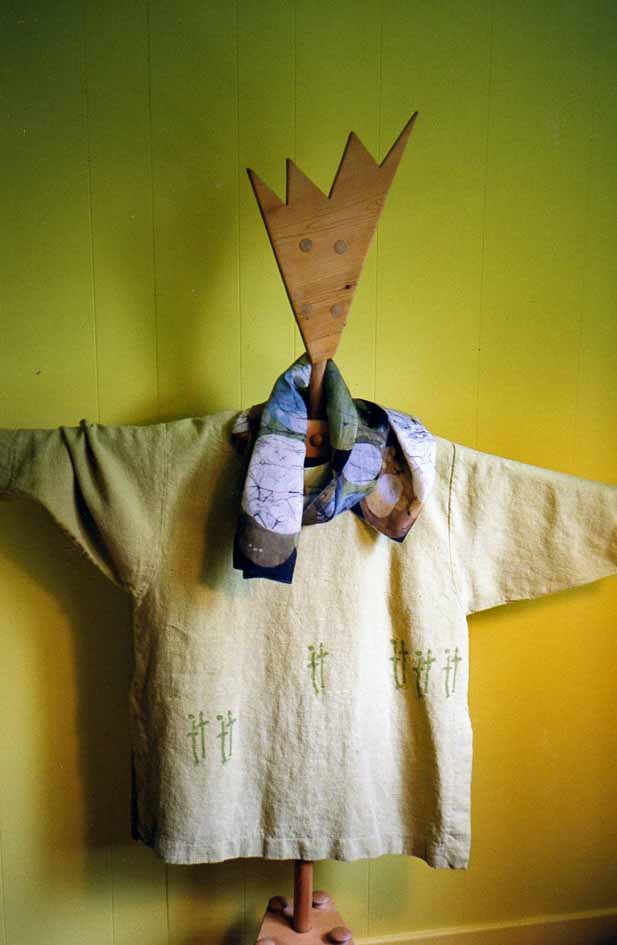
I like this kind of garment because it’s so versatile. So I bought a bolt of sturdy unbleached linen fabric and asked a friend to sew tunics for me. I dyed them in different colours and decorated them with my own stamps, cut in Speedball Speedy Cut.
The tunics of this series are all shown on one of the mannequins I designed to display my fabric art.

Linen, Procion fabric dye, Setacolor fabric paint,
hand made stamps. 1999.
Length: 82 cm

Here is another example of custom made T-shirts from my design studio. I used figure-stamps and added drawings of accessories I remember from circus performances.

T-shirt Circus
Stamps carved on Speedball Speedy-Cut, cotton fabric,
Procion fabric dye, Setacolor fabric paint. 1997


Some of my earliest fabric designs were created for place mats. They belong on a table, so I decorated them with food themes for different times of the day.


Acrylic paint, acrylic varnish, cotton cloth. 1994.
40×30 cm

Katazome is a technique of decorating fabric where areas of fabric which are not to be dyed or painted are blocked out. There are many different ways of blocking out; a well-known one is batik, where wax keeps dye or fabric paint from bonding with the fabric. Katazome is a Japanese technique, using rice flour paste as a resist or mask. I tried this on coarse cotton, and it did work, even though finer fabric would have given more detailed results. If following the traditional method, I would have used a stencil, but I preferred to do my geometric design freehand.
